Showing posts sorted by relevance for query virginia. Sort by date Show all posts

17 April 2007

In Honour of Kevin Granata, Professor & Colleague


Kevin Granata received his bachelor of science and doctoral degrees from the Ohio State University, and was awarded the master of science degree from Purdue University. He served on the faculty of the University of Virginia, Wake Forest University, and lastly at the Virginia Polytechnic Institute and State University, where he was a Professor in the Department of Engineering, Science, and Mechanics. Professor Granata, over the course of his career, also held the position of research scientist at John Hopkins University, Ohio State University, and the University of Virginia.

A biomechanical specialist, his research and teaching focused on neuromuscular control, robotics, and musculoskeletal and neurological reflex response, especially in connection to injury and disease. Professor Granata was an Associate Editor for the Journal of Applied Biomechanics and the Journal of Electromyography and Kinesiology, and had published widely in his fields of study. He also served honourably in the armed forces of the United States of America. Professor Granata was married and had three children.

Professor Kevin Granata was murdered on April 16th, 2007 on the campus of the Virginia Polytechnic Institute and State University in Blacksburg, Virginia.

19 June 2007

Mildred Loving: American Hero


Last week marked the 40th anniversary of the landmark Supreme Court decision in Loving v. Virginia, which overturned state laws banning interracial marriage. Mildred Loving, one of the plaintiffs in the case, prepared a statement on the anniversary and the case that is making its rounds in the homosphere, primarily for its profound support of gay marriage. This is a controversial connection, one refuted forcefully by some in various Black spiritual communities as a false equivocation between race and sexuality, with the usual suspects being the ever-tendentious debate around whether or not sexuality is chosen, is sinful, is unnatural, et cetera.

Of course, such debates are spurious primarily because they seek to draw an organic separation between race as a natural, empirical phenomenon and sexuality as a slippery, bourgeois decadence (practised by white people). There are indeed significant differences between race and sexuality as identity and political categories that augur caution in collapsing one into the other. However, the reliance on simplistic notions of race as a “natural” category is not one of them, in my mind. Yes, race is (in some cases) more "visible," and yes, race oppression is a different flow with a remarkably unique pattern in US social and cultural history. However, the mistake marriage conservatives make, both Black and white, as they weigh in on this debate over the corollary nature of race and sexuality marriage propositions, is firstly to imagine marriage as an ahistorical institution outside of time and space, and secondly to ignore the elasticity of identity bonds in racial and sexual categories that shift and change over time. As our social and cultural identities and our understanding of those identities transform themselves, our legal tradition does as well.

The ironic tragedy of the particular contours of this debate in the Black community is that it has placed certain Black spiritual and political leaders in league with the very forces that a generation ago called interracial sexual and marriage unions sinful, against Biblical law and intent, and socially and culturally disgusting (and as an aside, neatly opposed almost all Civil Rights reform which finally, in 1965, ended our national period of formal, legal white supremacy). It is important to remember that Loving occurred in an era when many white Americans had an antipathy to sharing a swimming pool with their fellow Black citizens, much less imagining Black Americans, and other historically disenfranchised racial-ethnic groups as co-equal citizens. Such intimate yet distanced disgust and revulsion has roots deep in our socio-cultural development, primarily the rise of slavery as an institution and the violent displacement of Native peoples in the European colonisation of the hemisphere.

A troubling myopia in our socio-cultural history is of the impact of miscegenation itself on the American self. Our neat, efficient idea that there are five distinct racial-ethnicities in our national diorama is quaint, but frankly wrong. Like other white settler/slave societies of our hemisphere, we are a mestizo society. We just refuse to admit it. The first colonial laws forbidding interracial unions were enacted in response to a burgeoning social problem (in an emergent slave society such as our own, the ability to tell the difference between free and not-free was paramount), not, as it is widely understood, to prevent one. Which is to say, lust and love work their ways in spite of craven legal and social attempts to prevent it. To put it more colloquially, people fuck. Everything else is an attempt to catch up to or constrain that desire.

Similarly, legal strategies meant to disenfranchise and marginalise lesbian, gay, and transgender unions (or fucking, if you prefer) of one sort or another will not make the phenomenon go away. We just have to wait for society to catch up to reality, an unfortunate American historical tendency.

In the meantime, we can appreciate Mildred Loving’s prescient and generous imagination of the space of love and loving, for which we should be grateful. Like so many of that tumultuous era of social and legal change that we still bicker about, Mildred Loving is a true American patriot and hero, by forcing us, through quiet action and albeit kicking and screaming the entire way, to live up to our national promise.

Loving for All

By Mildred Loving *

Prepared for Delivery on June 12, 2007, The 40th Anniversary of the Loving vs. Virginia Announcement

When my late husband, Richard, and I got married in Washington, DC in 1958, it wasn't to make a political statement or start a fight. We were in love, and we wanted to be married.

We didn't get married in Washington because we wanted to marry there.
We did it there because the government wouldn't allow us to marry back home in Virginia where we grew up, where we met, where we fell in love, and where we wanted to be together and build our family. You see, I am a woman of color and Richard was white, and at that time people believed it was okay to keep us from marrying because of their ideas of who should marry whom.

When Richard and I came back to our home in Virginia, happily married, we had no intention of battling over the law. We made a commitment to each other in our love and lives, and now had the legal commitment, called marriage, to match. Isn't that what marriage is?


Not long after our wedding, we were awakened in the middle of the night in our own bedroom by deputy sheriffs and actually arrested for the "crime" of marrying the wrong kind of person. Our marriage certificate was hanging on the wall above the bed.


The state prosecuted Richard and me, and after we were found guilty, the judge declared: "Almighty God created the races white, black, yellow, malay and red, and he placed them on separate continents. And but for the interference with his arrangement there would be no cause for such marriages. The fact that he separated the races shows that he did not intend for the races to mix." He sentenced us to a year in prison, but offered to suspend the sentence if we left our home in Virginia for 25 years exile.


We left, and got a lawyer. Richard and I had to fight, but still were not fighting for a cause. We were fighting for our love.


Though it turned out we had to fight, happily Richard and I didn't have to fight alone. Thanks to groups like the ACLU and the NAACP Legal Defense & Education Fund, and so many good people around the country willing to speak up, we took our case for the freedom to marry all the way to the U.S. Supreme Court. And on June 12, 1967, the Supreme Court ruled unanimously that, "The freedom to marry has long been recognized as one of the vital personal rights essential to the orderly pursuit of happiness by free men," a "basic civil right."


My generation was bitterly divided over something that should have been so clear and right. The majority believed that what the judge said, that it was God's plan to keep people apart, and that government should discriminate against people in love. But I have lived long enough now to see big changes. The older generation's fears and prejudices have given way, and today's young people realize that if someone loves someone they have a right to marry.


Surrounded as I am now by wonderful children and grandchildren, not a day goes by that I don't think of Richard and our love, our right to marry, and how much it meant to me to have that freedom to marry the person precious to me, even if others thought he was the "wrong kind of person" for me to marry. I believe all Americans, no matter their race, no matter their sex, no matter their sexual orientation, should have that same freedom to marry. Government has no business imposing some people’s religious beliefs over others. Especially if it denies people’s civil rights.


I am still not a political person, but I am proud that Richard's and my name is on a court case that can help reinforce the love, the commitment, the fairness, and the family that so many people, black or white, young or old, gay or straight seek in life. I support the freedom to marry for all. That's what
Loving, and loving, are all about.

* Together with her husband, Richard Loving, Mildred Loving was a plaintiff in the historic Supreme Court Loving v. Virginia, decided 40 years ago June 12, striking down race restrictions on the freedom to marry and advancing racial justice and marriage equality in America.

28 March 2006

Oso Writes a Self-Assessment


This past week the roof collapsed on my professional life. You’re tottering along, a bit woozy but still standing, minding your own business, dreaming of the summer which is right around the corner, there’s a lightening of the mood and the weather begins, gradually, ever so subtly, to turn, you decide to open your storm windows, you go for a walk in a “Fall” jacket, and then, in the words of the annoying cleaning commercial: KABOOM!


In short order, I woke up from my honey-coloured dream of lazy summertime barbeques and short pants and sultry Big Eastern City days and nights with Mr. Gordo to discover several outstanding bill collectors on the phone: a conference paper due forthwith (like yesterday!), students clamouring for extra credit work because they bombed your midterm, the usual meetings and minute-taking, long-postponed paperwork rearing up, not to mention tax time and the suddenly desperate need to see your CPA before he himself is overwhelmed. But by far the most demanding task at hand has been the need to write my year-end report on activities for my Dean, which because this is my first year at this particular school I severely underestimated. So underestimated, in fact, I didn’t even know it was due, until I received (again, out of the blue), a polite note from my chair. I fear I am becoming the very model of the bumbling professor who forgets his car keys in the refrigerator.


In essence, my “book report” is a catalogue of my activities in the three well-known subject areas: research, teaching, and service. And there is a certain empirical quality to the task that is reassuring: Yes, Virginia, you are exhausted for a reason! Committees and meetings, abstracts and conferences, works-in-progress and works forthcoming, student evaluations and syllabi, emails and phone calls, lectures and events. I have been, um, busy this year, contrary to the stereotype of the academic as social parasite, so eloquently paraphrased by my girlfriend La Connaire tonight who said, “I thought the whole point of academia was not working hard,” followed by the sound of a stream of smoke blown into the telephone mouthpiece. As most academics would tell you, the stereotype bears little relationship to the reality of most tenure-line professors. However, this cataloguing of the minutiae of quotidian academic life has gotten me to think of the differentials in experience for faculty across the broad spectrums of race, gender, and sexuality.


As a professional, I obviously covered the unholy trinity with some aplomb, if not utter success in all three. Given what has been thrown at me this year in terms of workload, I feel I did very well, as undoubtedly will my Dean, who has been nothing if not incredibly supportive. However, the differential I am thinking about here is the double duty that faculty of colour, some women faculty, and some LGBT faculty, perform in their role as symbolic capital for the profession. For we are not only meant to perform as scholars and teachers and colleagues, we also have to be role-models and mentors and supportive persons, lifting as we climb, each one teaching one, until we reproduce ourselves like some sort of crazy neo-Fabergé Organics Shampoo commercial.

This notion of symbolic capital is one that is both forced upon us by institutions looking for the diversity fix, and nurtured within ourselves, by varying degrees of gratitude, guilt, regret, and sadness at the price of our success. We are the best and the brightest, the cream of the crop, those who struggled and worked, only to find ourselves marooned as tokens who value is unclear, both to ourselves and the profession we serve. I am reminded of Toi Derricote’s story in The Black Notebooks, of meeting the “other” black woman faculty at the college were she taught, only to discover that this woman was as light-skinned (i.e. completely passable as white) as Derricote herself, and how this causes a crisis in her thinking about why they were hired, and what is the symbolic value of having two black faculty members who look white?

Ironically, tonight in my race class, upon discussing with my students Fanon’s The Fact of Blackness, my eyes fell on this quote:

It was always the Negro teacher, the Negro doctor; brittle as I was becoming, I shivered at the slightest pretext. I knew, for instance, that if the physician made a mistake it would be the end of him and of all those who came after him. What could one expect, after all, from a Negro physician? As long as everything went well, he was praised to the skies, but look out, no nonsense, under any conditions! The black physician can never be sure how close he is to disgrace. I tell you, I was walled in: No exception was made for my refined manners, or my knowledge of literature, or my understanding of the quantum theory.

To which all I have to say is: Ain’t it the truth? Faculty of colour can never be sure how close we are to disgrace, to the knife-edge of outliving our usefulness, our symbolic capital. Seemingly, we can never be appreciated as intellectuals alone. We must always have some other value, some point to our presence, aside from simple qualification. We must be, in the truism, 200% good. And never, ever, make a mistake, for it's not just our personal mistake, but a mistake for every person of colour, past present and future. If we simply think of this differential in terms of labour, then perhaps the contours will come more sharply in focus.


While I appreciate my white colleagues for the support they provide, they are not expected to “liaison” with Latina/o students and student organizations. They are not expected to be role models of appropriate behaviour. They are not expected to be present at every little thing that might concern race, whether interesting or not. They are not expected to be experts at the drop of a hat, nor responsible to others of their same race who might have particular critiques of authenticity for which they have to answer. No, my beloved white colleagues get to be themselves, be individuals, and go home and sleep soundly. So for me, this is not only about the incredibly problematic racial dimensions of role modeling or each one teaching one. This shit is also about work, cause believe me, this is work.

As any faculty of colour, nay person of colour, could tell you in an unguarded moment, the illusory community fostered by sixties social movements is exactly that: fleeting and utopian. Academics of colour in particular suffer from the vertiginous histories of racial trauma that are predicated on the unintelligibility of the subject of colour: the very fact of our theoretical stupidity. Living in a post-race society means that we are finally, blissfully allowed to be ourselves, individuals in a society that prizes individualism. Needless to say, we aren’t there yet.

And then, as I am thinking about this and taking a break from writing this post and perusing the Internet while wolfing down a quesadilla, I come across this little ditty, which linked from here, both of which sadly and ironically prove my point. The most inflammatory quote from Michael A. Livingston’s post on race and law school faculty is a bombshell:

Because it is so costly to dip below the required minimum of diversity faculty, in practice almost anything has to and is done to ensure that they are happy. At my school, I have watched sadly as one after another of the unwritten faculty rules--the level of publication expected, the expectation that one's work would be presented to the faculty before tenure, even the assumptions regarding physical presence at the law school--were compromised or abandoned to accommodate female or minority candidates who the law school simply could not "afford to lose" under the new dynamic. Once these principles are given away, of course, the same concessions are demanded by other professors, so that the entire system of expectations that cements a faculty begins to come crashing quickly down.

Good grief! So not only are we not smart enough to be hired on “merit” (the odious false consciousness of the late twentieth and early twenty-first centuries, apparently) but we also simultaneously threaten the very foundations of the institution. For as tenuous a hold as faculty of colour have in the profession, we seem to wield an incredible amount of power in Livingston's analysis. While it is true I have known some ‘playas’ (as in players, not beaches) who have worked out some pretty impressive deals on next to nothing, by far the vast majority of the professoriate of colour (and professoriate in general) works, day in and day out. In fact, faculty of colour are incredibly vulnerable not only through the typical utilitarian nature in which they are hired (as tokens) but also to the risible racism and real disgust revealed in Livingston’s quote. If anything, Livingston’s critique reveals more about the unscrupulous ways in which institutions will go out of their way to hire "dummies of colour" to avoid hiring contrary to racist type (e.g. with intelligence) than the general qualifications of a vastly diverse class of people, who after all have earned doctorates and J.D.s, right? If we trace Livingston’s critique to where it originates, this isn’t just a critique of hiring and retention practices, it is questioning the very ability of people of colour to hold advanced intellectual and professional degrees. And people wonder why race is still important?

The evidence is writ before you in Livingston’s post. Race still matters, and not only for red state academics or conservatives, for liberals and leftists hold similar, if more holistic, views. The black physician can never be sure how close he is to disgrace. One wrong move, and you’re toast, baby!


Self-assessment is hard, this I know after struggling with it this past week. But it might be time for the profession to take a real self-assessment of its own. For instance, when, if ever, will faculty of colour be real intellectual members of the community, and not just tokens of diversity and tolerance? When will the university and its faculty and administrators stop considering us as detriments to its intellectual mission? Why, if universities are so committed to "diversity," can't they sustain and support faculty of colour in double or triple digits? When can we stop the fiction of pretending just because student X is “brown” and I’m “brown,” we automatically understand each other, like dolphins? When, in other words, will our years and years of labour be appreciated for what it is, hard and good and honourable work? When, in other words, shall we breathe the fresh, clean air of individualism, which includes the noble as well as banal? When can we be normal, neither Sydney Poitier nor Step ‘n’ Fetchit? Not, apparently, any time soon.

15 March 2006

Welcome to the Dollhouse


I am so having a Weiner Dog moment! Yes, I am back in Cold City, and not loving it. It is always difficult to return to hard, cold reality after a moment in the warm light of companionship, friends, and favourite cities, but this bad mood started the minute I took my roll-aboard chiquitito off the luggage belt and left the arrivals hall at the airport. It built as I claimed my car, and unleashed itself into a full-blown tantrum as I made the drive into the heart of Cold City. It had abated somewhat upon enclosure in my garret, and has now descended into a bleak mood not helped by the grey weather. I spent the evening of my return having a desultory dinner with Prancilla and subsequently a minor spat on the telephone with Mr. Gordo over my bad mood, which needless to say left me feeling even worse, made even more hideous by the fact that I couldn’t find Madonna’s new CD single in my local record emporium.

Sometimes a girl has to question what she is doing with her life, and this current moment of existential evilene seems to such a moment. I need a plan, a to-do list, a fantasy, something that is more than a rosewood Hope Chest or the delayed gratification of a few years working towards yet another few years, just someplace else. The unhappiness at my return has a complex set of roots: self second-guessing, disappointment, loneliness, sacrifice, plans gone awry. It’s not that I hate Cold City, per se. As I told Prancilla during our dinner, a sort of “Welcome Back!” wake, I’ll readjust to the banality in a few weeks. I do feel, however, that there are better, more pleasant ways of wasting my time.

The tension for me seems to be how one goes about gaining the freedom to move, and the key is publishing work, work, and work! But publishing work is exactly what some of us find so hard to do. Between teaching, meetings, admin, meetings, trying to have a life, meetings, course preps, meetings, and, um, meetings, I am bereft. But these are excuses, and poor ones to boot.

University Diaries has an interesting post on teaching versus research today, paralleled ironically by a column on publishing by Ms. Mentor in the Chron, and both speak to our publish-or-perish academic world, or rather, the privileging of research over other forms of university service. I’ve always thought that my strengths as I scholar lay in teaching, curriculum development, and admin. Yes, I have publications, not a lot but some (nicely cited by others, I discovered via Google today). I am an active conference presenter, and have made the scene at the MLA and ASA as well as the minor nothing conferences that most of the time are more fun. But, it is clear, if this girl is to have her freedom, she needs to get busy on the writing, like, yesterday!

There are a couple of things happening here for me. One is the feeling of exhaustion and self-doubt. I rolled out of grad school first into a year of adjuncting (eight classes, three quarters, two institutions 40 miles apart with no car!), then into the four year hell that was Sadistic College, with 12 new course preps and a shit load of pelt stroking and diaper changing that is the private liberal arts college junior professor experience. Now, that I’ve washed up here at Cold City U., I feel like I’m just catching my breath. And Cold City, to its credit, is not putting on the pressure. Rather the pressure is internal: to move you need to groove (i.e. publish).

Publishing seems so oppressive and daunting, even after the thesis, ironically enough. I recently reviewed the comments on a draft article I sent to one of my academic doublegoods and she has, in her fashion, done an excellent analytical job, with useful and challenging comments and suggestions. But just to read the draft gave me an attack of neurasthenia. So much work, so much research, so much fact checking and all, cross-citing and dotting i’s and crossing t’s. Yet the evidence that academic work is not in fact rigourous is abundant. There’s so much dreck and “trophy” pieces floating around journals and publishing lists you have to wonder if the realm of knowledge is in fact not expanding but actually contracting, as the academic brain becomes more and more focused on the small, ridiculous point working for the reward of tenure, like Pavlov’s dog waiting for the bell to ring. So, who should be afraid of Virginia Woolf?

Of course, another reason may just be that I am a sensualist who would rather read blogs and shop for delicious body washes (current favourites: Vichy Homme and Clarin’s Eau Dynamisante Shower Mousse) than sit in my garret and write (i.e. lazy). But isn’t this just Horatio Alger sneaking cleverly into my head, like a fungus or a worm? “To succeed or not succeed is your responsibility/fault.” Meritocractic thinking is harder to dislodge than Gayatri Spivak from a complementary limo!


So, this first thing here (self-doubt) is connected to the second thing, which is the utter scandal that academic publishing has become. UD has a sharp parenthetical note in her entry today on “teaching,” where she writes, regarding the purported history of peer-review publishing: “These are often themselves bogus, based on simple article and book and grant counting. Do you think anyone actually read what Ward Churchill published, or took note of the quality of his publishers?” Glory Be! Big Wig advisor and I had a conversation when I left grad school on the state of academic publishing, the financial crisis that the industry is feeling, and the possible effects of this contraction of publishing on academe. Basically, as the academic publishing world faces financial ruin, who will validate excellence for an institution, the university, which has given up that sort of thinking? To echo UD’s point, academia has farmed out its work of evaluation to publishing houses and journal editors. Talk about lazy! While the hard work of evaluating is now done by outside institutions and businesses (either profit driven or increasingly broke), tenured professors have more time for personal trips to France and seducing nubile undergrads, I suppose. Or, alternatively, sitting around rewarding their do-nothing protégés while lambasting others for not having an “archive” (a criticism made of me by one particularly horrid piece of deadwood at Sadistic College).


UD made me think of an awkward moment at my on-campus interview at Big Ten Gender Studies Program last year. It was my first-night dinner, before the interview day. The chair, various department faculty, several affiliates and myself (of course) had gathered at a rather swanky restaurant to begin the Big Sell (theirs and mine). At one point, in storms another affiliated professor, kind of like Shelley Winters in the Poseidon Adventure, all bluster and noise, but likeable in a strange sort of way. She had the requisite overflowing canvas tote bag so common among women professors d'un certain âge, as well as Casual Corner attire and (no doubt) Easy Spirit pumps (you know, “looks like a pump, feels like a sneaker”). Compared to the swells I was having dinner with, in their basic black, she was clearly the poor relation. Polite talk begins to revolve a bit around guidelines for tenure and promotion, with all the usual bland assurances and parameters, when Ms. Winters-if-you’re-nasty drops a bomb that practically had the chair choking on her mango-cilantro chutney reduction: “A book for tenure?! Blah! They didn’t even take the plastic wrapping off my book when I submitted it for tenure!” Awkward silence ensues. Big Time Prof looks like she’s shitting a brick. Young Cool Prof examines the detail of the brick wall behind the table. I think I gave a weak, unsure Mona Lisa smile. Whoopsie! God bless Shelley Winters for letting the cat out of the bag on that one! Honey, Ms. Winters was keeping it real, baby!

So, part of my reluctance in playing this publishing game is that it really is putting notches on one’s lipstick case. It’s numbers, it’s scores, it’s the academic version of tricking. It is also, in a word, representation. Our profession has moved to the point where scholarship is representational strategy devoid of substance. This in and of itself is not terribly surprising, since we live in a culture that has increasingly become divorced from reality-based approaches. But it does add an additional layer of disappointment to all the crap we already have to listen to and lines we have to tow: We are good teachers! We value students! We are excellent! We are producing knowledge! In this version of a worker’s paradise though, the state doesn’t wither away, it slowly sucks the life out of you, like watching American Idol or Lifetime Television for Women.


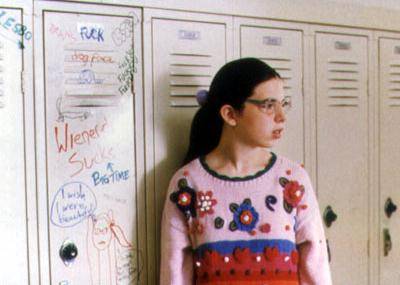
I'm not stupid. Clearly, playing the game is part of the whole shebang, but that doesn’t mean I have to like it or believe in it. As I begin an approach to my work and getting more of it done, partially to save me from my bleak mood as well as to give myself options, I feel like Diana Ross in Mahogany, giving in to the Italian Count after her (hideous) fashion show triumph. To play, you gots to pay, doll! If indeed, academic publishing is like tricking, like an egghead Griffith Park where the sex is books and articles (Barthes anyone?), then I’m gonna put on my cut-off jean short-shorts and go hustle. Toot toot, hey, beep beep! Now it’s time for my Big Sell! Tonight I have phone dates with my doublegoods LL and Vicky, for some moral support. But I plan on curling up with Getting it Published and Revising Your Dissertation, in preparation for whatever comes next. I don’t want to be Weiner Dog in the final scene of Welcome to the Dollhouse, singing along desultorily with the Hummingbirds on the school bus to hell.

15 November 2006

Whispers, Rumours, and Foreshadowings, or, I Get Along


One of the things that has always struck me about Caracas is its nature as a city of rumour, of gossip, of misdirected forebodings and predictions. Certain oracles predict the collapse of society on this date, the fall of the Chavez as deduced from the toss of seashells, the scent on the wind, the rise and fall of the moon and tides. The machinations over the presidency of Hugo Chavez have perhaps exacerbated this quality, but it also seems to be fundamentally linked to the nature of the place: from gossiping cachifas and matrons and overheard conversations on the Metro to the television chat shows and newspapers and someone’s cousin in the army or sister at PDVSA. I am reluctant to deduce whether this is a Latin or Venezuelan or specifically Caraqueño trait, although it has always seemed most pronounced in that wonderful and horrible city of glass and highways and crushing poverty and elegance.

Once, Mr. Gordo and I were practically driven into a panic over the rumour of a violent protest that was blocking our return to his brother Quique’s house for dinner. Manically shopping for food whilst at the same time trying to figure out a way around the rumoured protest on a dodgy cell phone, we drove ourselves into an exhausting hysteria, only to learn, upon returning to the house, that the whole thing was untrue. We collapsed into a neurasthenic funk, much to Quique’s consternation, as we had returned with nothing for dinner, but lots of strange things: Guayaba Yoplait, harina pan but no meat, candy bars, deodorant. A short list of the desired and purportedly necessary, but in the end a collection of rather random items grabbed quickly that, together, would not provide a decent meal.

I relate this story only to speak to the disjointed collection of events and moments which have typified my life of late: comings and goings and rumours and possibilities and unpleasant encounters that have been unsettling, as well as glimpses of presents and futures that entice, as the winter sun sinks low on the horizon and the light grows paler. These are thoughts not necessarily connected, traces to protect the guilty, including yours truly.

Hostess with the Mostest, or, An Embarrassment of Riches
Over the past three and a half weeks, three dear friends (La Antropóloga, Mahku, and Skanque Huore) and Mr. Gordo himself have whirled through Cold City, changing a relative social desert into a verdant oasis of brunches, schlepping, and mandatory touring. Visitors always force you to look at yourself from the outside, a different perspective. What has been most striking about these visits from “home” is the impression visitors invariably pronounce: that I look assimilated, comfortable, at home, in Cold City. Whether this is a function of my adoption of Fleece wear or my magpie tendency to pick up local accents to a degree above and beyond what even the locals speak, I’m not sure. But it has made me think a bit about my own acculturation into the Cold City scene, both literal and figurative. This past weekend, with Skanque Huore in town, we toured the sites that speak to her own peculiar orientations: the small, empty Masonic museum, the cathedral and various churches, good restaurants, as well as a cold night spent watching Serial Killer documentaries at home, ruined when we decided to actually go out in the cold for a meal, as opposed to frozen pot pies and more Serial Killer dramas. As we surveyed the view from the cathedral steps, of a roaring interstate and dead trees, she pronounced she liked Cold City a lot. Me, I am adjusting. But again, here, the magpie tendency for deep stealth, which Skanque Huore noticed in particular in my accent (which as she made more of became stronger and stronger), and attributed to survival instinct: so local you’d never be able to tell. A similar process happened in Montréal, all of which has resulted in my spoken voice, especially when I am nervous, assuming a myriad of accents sliding along a peculiar scale: Canadian, Quebecker, Californian, New York Jew, plumy Prestigious U, Cold Place elongations. It’s a bit hair-raising.

Our Lady of Hearing, or, Imagine the Arguments We’ll Have Now that He Can HEAR
The weekend after Mr. Gordo visited Cold City, he had a surgery in New York to restore the hearing in his left ear, which was functionally deaf, and the outpatient procedure was performed without a hitch, meaning that now Mr. Gordo is a cyborg. Over the summer, I accompanied him to his meetings with the various surgeons to discuss the procedure, implications, and costs, but in the end was unable to be in New York with him for the actual surgery, although the Beautiful Lisa came down from Massachusetts to attend to him over the weekend. Imagine my disturbance when, after he had been wheeled into surgery, the Beautiful Lisa pronounced over the telephone that she was off to see a movie! In any event, all went well, although we are awaiting the results of his post-operative visit to the surgeon and hearing test to see if it was successful. (Also, now Mr. Gordo has 80% hearing in that ear, which means, ideally, no more screaming on the phone and strange encounters in public, when people say something to his left ear and when he doesn’t respond, get huffy.)

redacción personal
On second thought, some things are better left unsaid...

Hopes and Dreams
Yes, Virginia, I've been reading Variety. Who isn't this time of year?

Birthday, or, How Old Do You Think I Am?
Sometime during this period, I turned 38. 3-8. Now I feel like I’ve taken all my clothes off. Really, getting older has not been terribly traumatic, perhaps because I still look rather youthful, but birthdays, aside from being non-events, do give one a pause, a moment of reassessment best left unexamined, ultimately. Age is more than just a number, unfortunately, and one can so easily get caught up in counting the remaining years rather than thinking of more joyous things, like trips to Madrid, for instance.

I Get Along
This weekend, I dropped off Skanque at the local contemporary art box and went to a baby shower for M. and her paramour J., one of the new modern baby showers that are mixed gender (although Skanque gracefully demurred, as she can’t stand the sight of infants or even the implication of babies, she is so modern). There, although I knew hardly anyone but the mother-to-be, I passed a pleasant couple of hours, avidly discussing child-rearing with the grandmother-to-be and a group of older women, while the “men” watched football. My girl G-Money, visiting from her sabbatical and the one who introduced me to the impending mother, arrived in full flower, looking fabulous in a seventies-style wrap dress with her dangerous curves, enough to make even a dedicated Sodomite like myself reconsider some life choices. Wedged on the couch between G-Money and Grandma, I thought, well, this is life, maybe not the one you imagined you’d have, but one nonetheless. So, go with it.

30 October 2006

Whither the Library?


In the midst of a lingering cold, student appointments, and classroom demands, not to mention trying, unsuccessfully alas, to return to the edits on the manuscript, I ran across an email last week from our Faculty Teaching Centre for a workshop on library resources, which offered a stipend to attend. Given that Miss Oso is broker than our current administration’s policy in Iraq, I signed up, and after some creative rescheduling (i.e. a hasty note on my office door), I was dim-eyed and wet-tailed for the first 9:00 am meeting of the seminar, grasping my coffee as if it were a life line. There were a wide range of faculty there, from many disciplines, and I wondered, as it got under way, how many of us were actually there for the money as opposed to the actual training. My guess would be all of us, in fact. But the stipend aside (which one could argue is perfectly legitimate, since you are taking up faculty time which deserves reimbursement; I wish Sadistic College had offered stipends for all the bullshit one was expected to perform for free), one always learns something useful in these seminars, almost in spite of oneself (and the typically early hour they commence).


Very quickly, we got into a discussion on the role, history, and future of the Library. The session discussants were library science professionals, and wanted to touch on some of the issues in contemporary library culture, then move on to some exercises. However, given that they were speaking to a crowd of faculty, their plan had soon gone awry. The group entered into a lively, if sometimes tense, discussion on the Library and its pasts, presents, and futures, that supplemented the schematic the discussants had proffered, a set of questions not grounded in the research library, per se, but the Library as a social and public institution. What was the function of the library today? What was the mission of the library in a digital age? What were the public perceptions of the library’s past, the realities of the library’s present, and the challenges to its futures?


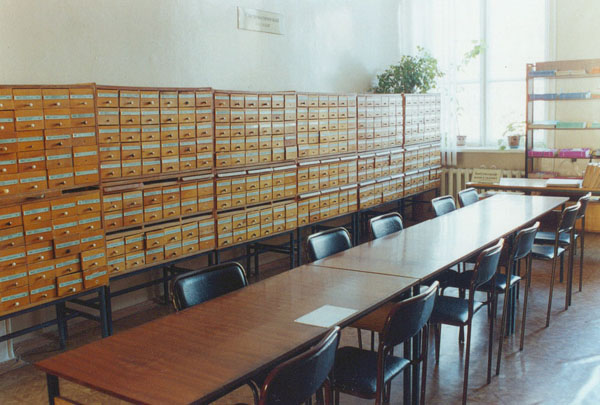
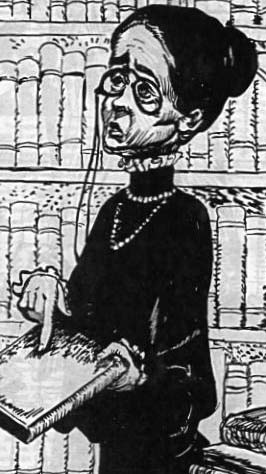
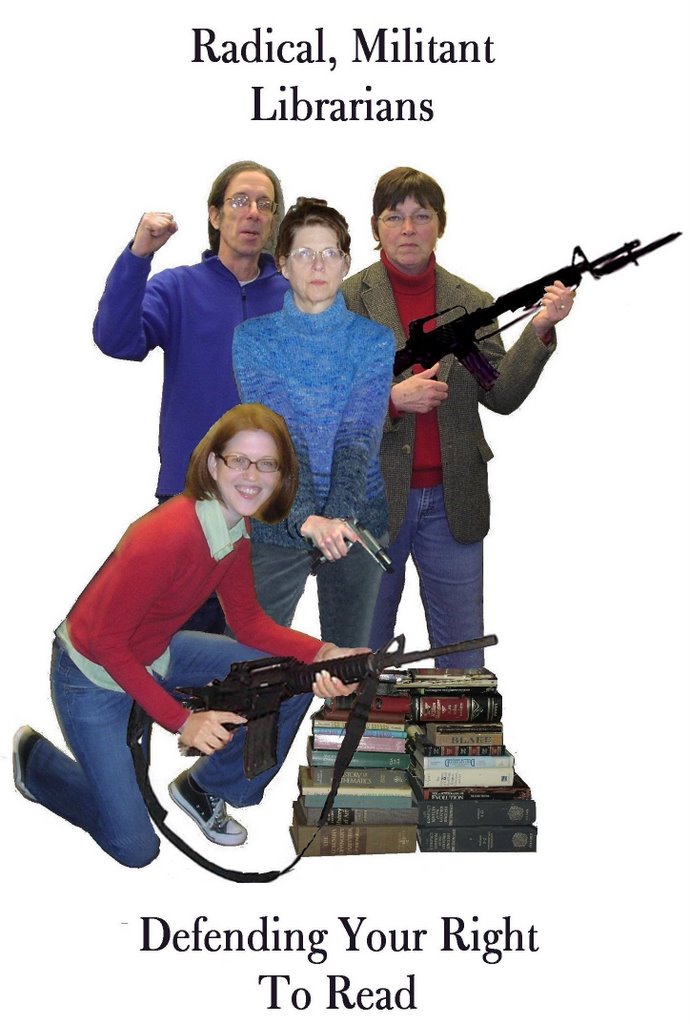
Some of these questions came down to how the library had changed in our collective lifetimes, from quiet places (the infamous and notorious “Shhhhh!”) to increasingly cacophonous spaces of conversation, beeping and ringing cell phones, yakking schoolchildren ("Can't you just shut up and stare into air?"), and interactive activities far outside of the realm of mere books: DVDs, audio materials, classes and courses for the community, and homework centres. One of the discussants made the interesting observation that the political role of the librarian has changed, from guardian of culture to defender of free speech. Perhaps the librarian’s role was always thus, but it struck me as compelling that in the past the librarian was regarded as somewhat of a fuddy-duddy, with rules and the Dewey decimal system and the ever-present shushing, not to mention the long-standing social stereotype of the old maid librarian. Nowadays, libraries, in particular new ones, tend to be bright, social spaces. Librarians come to work in red North Face fleece jackets and techy sneakers, and are constantly cheerfully pimping some event or other: Banned Books Week, Black History Month, Gay Pride Month, Graphic Novels Week, etc. Librarians are now fun! Computers have replaced the card catalogue, and the public has been drawn back into the library as a site of electronic interconnectivity in a manner unknown when I was in high school and college, when the library, in particular the university library, was more of a cloister than community centre.


As part of the seminar, we toured a local public library close to campus, and saw the range of services the “New Library” offered to its patrons: popular DVDs included the notorious Inglés Sin Barreras complete set, a collection of Manga comics, apparently all the rage among the tween set, workout and self-improvement videos. As we looked at the offerings in the homework centre, the discussant, who works with this particular library, told us that they were in the process of purchasing Dance Dance Revolution, which they expected to draw more young people into the library, as well as provide them with more physical exercise (!). This caused firstly a pause, then some serious questions among the group: what exactly did Dance Dance Revolution have to do with the library? Was the library now, in addition to a child- and elder-care centre, now a high school gym (complete with the high school dance)? But it was clear, from the standpoint of any competent understanding of what libraries have had to do to survive, that increasingly libraries have embraced concepts of popular entertainment and child care to fulfill their missions, not to mention to sustain their generally meagre funding. Most of us understood this pressure to compete with other forms of entertainment, and prove one’s social and economic worth to a skeptical and anti-intellectual public through raw numbers of patrons ‘edutained,’ but the inclusion of a crazy televisual dance game with loud music as part of the New Library’s mission struck me as slightly absurd. Have we indeed descended this far? What's next, strippers on Mondays and Bingo on Wednesdays?


Apparently, we have. An interesting part of the introductions was relating a bit of our own history with libraries, in general. Most seminar participants, whether out of a taciturn nature or the early hour, declined to elaborate. But I thought it was actually an excellent question to locate ourselves as intellectuals and educators. Most, if not all, people who hold doctorates in the humanities have spent considerable time in libraries. The dimensions of the time, however, are interesting to parse. For me, at the secondary school level, going to the library was a chore to be done only if impossible to avoid. My high school library was small, certainly not of the Breakfast Club variety, and held very limited resources. Mostly, it was a place for the typical high school pranks, such as pasting maxi-pads on the ends of the shelves or as the milieu for detention for teenage jezebels and delinquents. Like most high school libraries, it was not a place for intellectual repose. I would often have to venture to the local municipal libraries to find material, but made my visits quick jaunts with no lingering. In my youth, libraries were not vibrant places, even if I knew how to use them.


Moving onto Prestigious Eastern U, which offered a range of libraries for every sub-topic and specialty, as well as a large central collection, the relationship shifted. The library now, in that mini-city of eggheads and intellectual discontents, was a social and networking site, as well as a veritable den of inequity. The basement men’s room in the main library was a notorious Tea Room, for the uninitiated a public place where men gathered to have anonymous sex, and even as HIV was on the rise, remained incredibly active. Too shy and virginal to participate or even know about such things, I was schooled by my girlfriend Caribbean Queen, a Haitian-American undergrad who had already lived an infamous sexual life in New York as a teen before coming to study at PU, cruising the public places where men met to have sex. His favourite thing was to sit on a padded bench outside the men’s room and clock the men coming in and out (literally timing their stays, which often lasted for hours) whilst purportedly doing his homework. As well, as we were eventually to learn, he was a participant in the action as well. Since this rest room was right off the general lounge with coffee and snack machines, our group, the Trend Pack, would often gather there with him on his bench to socialise and shoot the shit, no doubt endlessly annoying the cruisers just a few feet away, engaging in the rapid and passing passions of sex in a very old-fashioned men’s room, marble stalls with a large anteroom that had once held furniture but was now barren. So, quickly, I came to associate the university library with sex and socialising, although I’m still not sure of the connection between these two and the millions of books which lay over our heads as we yakked and joked and drank bad coffee and smoked (Yes, Virginia, smoking in the library! Ah, the eighties).


My other favourite library milieu was the Art Library, in a very modern concrete building designed by a once famous but at the time disgraced architect from the sixties (he is back in vogue now). The library, like the building, was once beautiful and compelling but in the eighties was a shambles. Hot in summer and cold in winter, cramped and strangely spaced with occasional leaks necessitating the egregious use of plastic sheeting, it was in spite of its flaws a veritable centre of coolness when I was an undergrad. I even worked there, miserably, my freshman year, after being fired, I mean leaving, my first campus job, as a secretary for two neurotic curators with the same name (the two Janets) at the university gallery. While actually working as a bursary student in the library was anything but glamourous, it did put one at the centre of a certain scene, and gave one a power that was interesting. After all, every cool person had to come to me to check out anything, or get something on reserve. La Zeez, whom I had met my freshman year but did not become friends with until sophomore year, remembers an encounter with me when I worked there, where apparently I was terribly bitchy to her as she checked out material. I had thought her at the time quite the snob, although I don’t remember the incident in detail. Once a Diva, always a Diva, apparently.


In any event, my relationship to the temple of knowledge gained precision in my graduate years, where at a small R1 state school I mastered the modest library fairly quickly, and became proficient with its collections, particularities, and peculiarities, including the strange culture of the university librarian, a creature all its own in the academic ecosphere. After sixteen years of formal schooling, the library finally met its purported mission in my head: as a place for ideas and books and material. On my recent trip back to Doctor Town, Advisor joked that now no one actually goes to the library: it is practically all virtual. The building itself, undergoing a renovation, is planning more shelf space but also more social rooms and spaces, to become more like a community centre rather than an exclusive repository of books. Libraries have of course always had that role and function, but the manner of approaching these aims, especially for public libraries, seems to have entertained a decidedly different scope and scale.


Still, the library in its edutainment mode fulfills vital social functions, as places where children can be relatively safe, where immigrants and pensioners can check out the material that speaks to their needs, where those without home internet access go to check email or buy something online (or look at porn, when they can), therefore lessening the vaunted digital divide. But will the library eventually lose the books and reading and just become a social centre, even on university campuses? This is an interesting question. It is far too easy to err on the side of entertainment rather than education in the synthesis of 'edutainment.' I do think we lose something when the line between the two becomes too blurry. And this is a shame, for the library as a site of self-formation has been central to my own development as an intellectual, albeit in strange and unconventional ways. The New Library does not really appeal to me. If I wanted to spend time with loud schoolchildren and the odd pensioner, I would go to the Mall. Then again, the digital explosion in library resources means that academic misanthropes such as myself no longer have to actually go to a place and see people whilst pursuing books or articles. Remember photocopying? Ha! Some things are indeed not missed. But the new libraries, whatever their paradigmatic limitations, are packed with people. So obviously, a need is being met. But the old library, the shushing and the schoolmarms and the old maids and the cubicles and the card catalogues, gone oh so long ago, will always be central to my understanding of the role and function of the library, even as seemingly this vision withers away or rather transforms itself into another creature entirely.

17 August 2006

Memories of Overdevelopment


Mr. Gordo and I just returned from an extended holiday in the surf and sun on Cape Cod, which was absolutely delicious (or as Mr. Gordo would say: day-lee-shus). The roar of traffic and sirens outside the window of Mr. Gordo’s Big Eastern City Easy Bake, and my impending return to Cold City on Saturday for the commencement of the school year, threaten to push aside both the idyllic images of lovely beaches, blue skies, and deep-fried everything on the sunny porch of Captain Frosty’s as well as the less halcyon queues of traffic on the road to Hyannis, crowds of ugly and beautiful people packed onto small beaches at high tide, and the horrors of trashy tourism on Commercial Street in Provincetown.

Grace à The Beautiful Lisa, my cuñada who lives in Yarmouth Port year-round, we were able to descend into the fantasy of an almost two week holiday by the sea, at relatively little cost to ourselves (not counting Captain Frosty’s and extraneous trips to Christmas Tree Shop for beach junk and the CVS in Hyannis for Vichy). For the better part of the trip, The Beautiful Lisa was away in Caracas caring for a friend undergoing chemotherapy, so we had the house (and her luscious Turbo Jetta) to ourselves, aside from a crowded first weekend when Big Sis, her partner The Printmaker, and the familial unit of La Antropóloga, Mr. Polemic, and El Babycito (plus the proverbial visiting Israeli cousin, who turned out to be lovely) all arrived practically simultaneously for a couple of nights with us, in The Beautiful Lisa’s fantastic house, with all the mod cons and more. It took me three days to finish the laundry from that initial, semi-bacchanal weekend.

We settled into a somewhat predictable pattern: mornings spent watering the garden, maybe some weeding, over cups of coffee, then figuring out a meal of some sort (In or out? Breakfast or lunch? Fried or deep-fried?), with afternoons dedicated to finding a beach that was not completely inundated by fellow Cape visitors. For this last part, we were only partially successful, but wanting to avoid stinging jellyfish, we tended to stay on the bay side of the Cape, in particular venturing lazily over to Dennis (the next town over) and lounging on the beautiful tidal beaches of Chapin and Mayflower: two beach chairs, an umbrella (!) and books. I made my way through Arenas’s Before Night Falls and Gloria Naylor’s Women of Brewster Place and Linden Hills while basking under the glorious late afternoon sun (Mr. Gordo is sun-sensitive, and who wants a sunburn anyhow?). The photo above was shot by Mr. Gordo as I waded into the sea during one of many spectacular sunsets.

Of course, we went to Provincetown for a late day at a cold and windy beach (Herring Cove, but we found out later that we made the wrong turn at the entrance and were on the “straight” part of the beach), with an evening spent with Ms. Bounder, a beautiful ex of The Beautiful Lisa, sharing delicious fish sandwiches at Clem and Ursie’s and continuing on to see Hedda Lettuce’s show in town. While Hyannis and Provincetown seem a million miles apart in terms of their socio-commercial raison d’être, the long and powerful reach of American capitalism has turned both into strange examples of overdevelopment and excess: Hyannis with its big box stores on its large boulevards along the northern edge of town and its relatively anemic Main Street (whose only saving grace is Tim’s Books, with a remarkable collection of used and hard to find material; amazingly, I was able to find this and this and this there), and Provincetown, with its gloriously overdeveloped and pretty Commercial Street weighed under with the dreck of T-shirt shops, tchotcke shops, gelato shops, postcard shops, “gay” shops (rainbows everywhere, and not a drop to drink), and overpriced fish and chip stands. Bleh! While venturing through the various commercial wonderlands of the Cape, I wondered about how this all happened, and what brought people (people like me) back to these places? There was beauty, under all the makeup, somewhere, but certainly not in the dreck of Commercial Street nor the all-American contents of Hyannis’s shopping malls.

The only true difference between Hyannis and Provincetown I could spot was that the former was straight, and the latter decidedly LGBT, with a deadening commercial effect on both. Oh, and P-town has pretensions to a better class of people, although all that seemed to indicate to me was that things were more expensive in P-town, and therefore “better.” In fact, the open presence of LGBT sexuality in Provincetown was nice, if a bit alarming (even in the city, people aren’t so open about their affections; perhaps it is the effect of the sun and sea?). The highpoint, or low point, of the visit was the outrageous Human Rights Campaign STORE on Commercial Street. You read that right Mary, a store, dedicated to all sorts of objects/crap bearing the HRC’s signature Equality logo: book bags, caps, t-shirts, mouse pads (who uses those anymore anyhow?), mugs, shot glasses, hoodies, windbreakers, flip flops, and even a beach ball! Mr. Gordo was strangely fascinated by all these objets trouvés, while I was reaching for the barf bag, which no doubt also had an equality logo on it. I’m, ahem, as proud as the next queen, but why would I want to parade around with an HRC hoodie and matching flip-flops? I already loathe the flip-flop trend anyhow (more bad, bad American sartorial choices). Besides, I hope people can see my gayness from 50 metres, like a big searchlight, therefore making advertising redundant.

Other moments: A gaggle of early teen girls, wearing matching Cape Cod hoodies (in different colours), too much makeup (The light touch, honey, you’re already pretty. Jesus, honey, you’re fourteen! You’ve got years yet to use the trowel!) and bored out of their minds, wandering around Inaho during dinner while Mr. Gordo and I demolished several scallop hand rolls. The silence of the ocean just a few metres from shore. Quiet nights reading in bed, or smoking outside under the stars. The Brazilian grill in Hyannis with delicious feijoada, diet guaraná and a rude waiter (although cute). Racks of hats that didn’t fit at the Yarmouth Port Christmas Tree Shop. Buying matching chiquititos with Mr. Gordo at Ocean State Job Lot (primarily because I had brought my clothes up in shopping bags, which Mr. Gordo labeled as “rancho”). Eating scrumptious clam pie with The Beautiful Lisa upon her return from Caracas. Collecting rocks and seashells with Mr. Gordo along Sandy Neck and Yarmouth Port’s “secret beach” on Barnstable Harbour. Irish girl hostesses, Irish girl shoe clerks, Irish girl fish and chip slingers. The young Lithuanian waitress at the Optimist Café straight out of Almodóvar, running around with an understaffed kitchen in heavy, clunky heeled shoes, exasperated and comic all at the same time. Sand, everywhere (the car, the sandals, the porch, the rugs, the bathroom, the chiquititos).

I have only a few more days here in Big Eastern City, and have turned anxious, and not only because I will have to negotiate Prancilla’s no doubt spider-filled garage in the dark without a flashlight when I return to Cold City late Saturday night (Prancilla, having decamped to Staid but Multi-Culti Eastern City for his new job [sob!], left my car at her as yet unsold but empty house). Having a long-distance relationship means, on some level, always saying good-bye, and that has made me sadder than the impending doom of the school year, which promises to be rather spicy (new department faculty arriving, new challenges, refining my teaching, getting some work done, etc.). My garret waits in Cold City, silent and dusty and no doubt stuffy as well, since the windows have been closed since July 2nd. Prancilla is gone, and I have no one to ring on Saturday night upon my return to celebrate with, for Prancilla was really my only true friend there, and now he is gone. Oh, sure, I have things to do: clean, stock the fridge, get a haircut, and the meetings, already the meetings, begin Monday. Oh, yea, and write a couple of syllabi. So, hopefully idle hands and devil’s playthings will be kept at bay, for the moment at least. But, I am feeling sadder and sadder as Saturday comes closer and closer.

Ambivalence, regret, sadness, hope, inspiration, et al. Some of this is leaving the heavenly embrace of Mr. Gordo, who is always soft and warm as a child’s bath, as mother’s breast (mine personally had the intoxicating liquor of Chloé and Virginia Slims, a smell that can bring tears to my eyes), as milk with cookies. Some of this is returning to a (s/cold) city minus your bestest doublegood girlfriend [double sob!]. But no doubt some of this is also just the end of summer, finally, irresolvably, again. But I have a nice tan.

28 September 2006

L'education des gosses


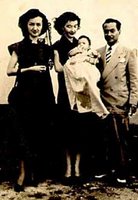
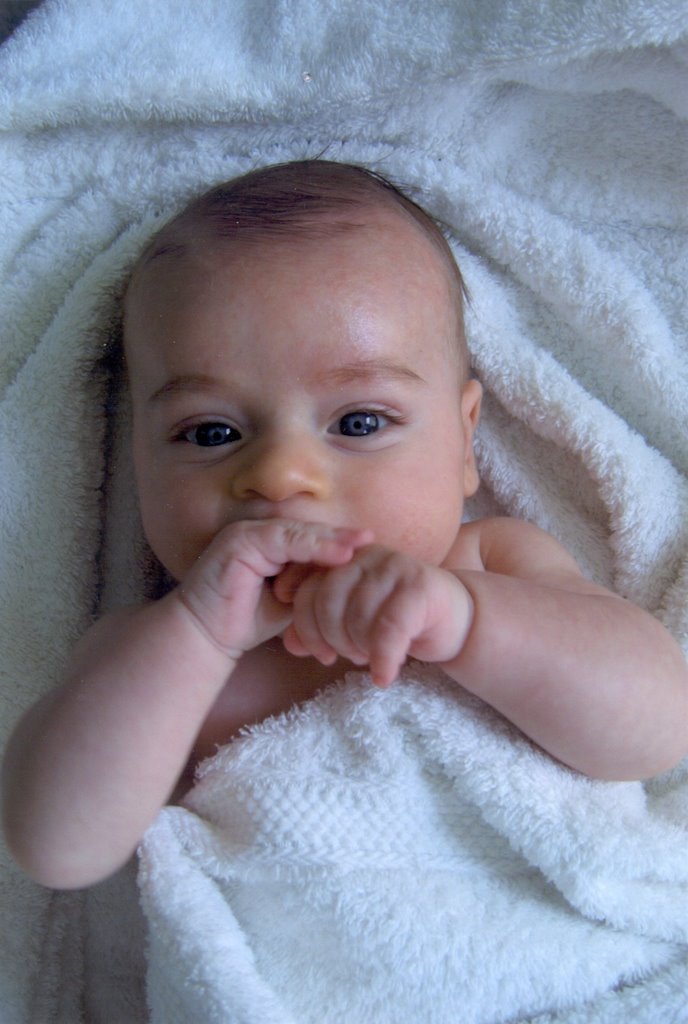
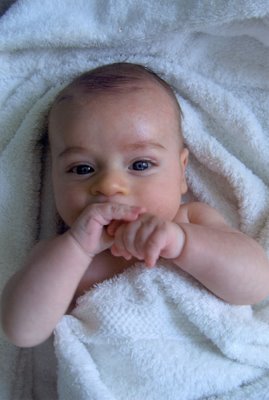
The beautiful baby boy pictured above is my Godson, El Babycito, the child of La Antropóloga and Mr. Polemic. He just had his first birthday, so the photo above is a bit out of date, however since I think all men look better with shorter hair, I am fond of this photo. I could swoon over his brilliance, his talent, his adorableness, but suffice it to say he is wonderful in his own special ways, as all children are before they discover the art of talking (back). Ah, the miserable joys to come!

The night La Antropóloga told us she was pregnant, Mr. Gordo and I had invited her over for supper, sans Mr. Polemic, who was elsewhere, exactly where I can’t remember. At the end of dinner, as we sat and yakked over the table, La Antropóloga announced she had something to tell us, to which I responded by saying jokingly, while blowing out a stream of smoke, “What, you’re pregnant?” When she answered in the affirmative, I was a little disconcerted, for a number of reasons. Mr. Gordo, of course, ever effusive, responded wonderfully. It took me a few weeks to regain my composure.


Why I would be less than excited by the coming of a child had a lot to do with how I consider(ed) parenting. Children are symbolic of so many complicated things: the end of adolescence, responsibility, maturity, adulthood. In one’s twenties and thirties, the carefree nature of adult life, the joys of adult life, and yes, the selfishness of adult life, struck me as the epitome of pleasure. Also, I could barely feed and clothe myself (some things never change). What would I do with a child? As I moved through this period of my life, I would often think of my mother at the same moment in time in her own life, for she had me at a young age. How she was able to accomplish parenting seemed like a divine mystery, a riddle of the Sphinx considered briefly as one applied cologne before going out to a fancy dinner with chums. It didn’t help that seemingly every heterosexual couple I knew at the time (and some LGBT ones as well) were getting pregnant or adopting babies or grabbing children off the street or however people go about getting children these days. It wasn’t that I didn’t approve of having children, I just didn’t want to lose my friends within the superstructure of modern parenthood, disappearing within the maze of obsequious "play dates", hypercompetitive endless yak about Junior’s progress, and precocious children interrupting adult conversations with mindless questions and demands. I feel/felt that parents in my particular intellectual and economic class experienced more than just the physical and biological changes that occurred during a natural human gestation: they also became in short order pod people, single-minded and decidedly unpleasant to be around.


Partially, this feeling was also reinforced by the phenomenon that was La Antropóloga and Mr. Polemic. La Antropóloga and I had begun working the same year at Sadistic College, and I remember our first meeting. I was at an introductory cocktail hosted by a very old but very jolly faculty couple (i.e. drunks) at their interestingly Preppy-Baroque-Scarsdale Killer home right before school started. La Antropóloga showed up with an old grad school chum, another young woman, in matching black outfits, and I just assumed, certainly from their physical countenance, that they were lovers. At the time, La Antropóloga had a tendency towards cute, ultra-sexy outfits that befitted her petite figure, a rare site among the majority of women academics I had known up to this point, who generally tended to match their male colleagues in a race to the bottom of the frump pile. In retrospect, the fact that she was so fashionable corresponded to my impression of La Antropóloga as a lesbian. At least in my universe, aside from their bad reputation, some of the most beautiful women in the world have been devotees of Sappho. Gimme a lipstick lesbian any day and twice on Sunday.


It was some time later that I met Mr. Polemic when he joined La Antropóloga in residence at Sadistic College, returned from whatever bushel his light had been hiding under, and then it all made sense, as one of those couples that seemed destined to find each other and belong, visually, aesthetically, and temperamentally, to one another. While I may have met him beforehand, the first lasting impression I have was at a party thrown at my small apartment, before Mr. Gordo and I lived together “officially.” Mr. Polemic ranged over a variety of topics, while drinking steadily. Charming, effusive, argumentative, and provocative all at the same time, he had the peculiar talent of nailing a point to the floor with a sledgehammer and a disarming, wry smile on his handsome face; all in all an unusual talent among academics, who especially amongst themselves tend to be as cautious and nervous as wallflowers at their first school dance. Together, they were bon vivants of a sort that I thought had gone extinct with smoking in airport lounges, the Gold Standard, Patricia Nixon chiffons, and gasoline at 75¢ a gallon, always impeccably dressed and groomed. I made the mistake once of showing up at their house for dinner at the end of one hot, humid summer day in shorts and a rank t-shirt, and had to suffer a delightful dinner astride them in their linen. Afterwards, recovering from my mortification, I always made sure to be put together for any little outing, whether that was the grocery store or dinner.

La Antropóloga and Mr. Polemic rapidly became a social centre of life at Sadistic College in those early, heady, and relatively happy days, and their parties became legendary, as much for the amount of top-shelf liquor and luscious, rich food that flowed from their kitchen as for the engaging talk and quirky, unstable personalities that surrounded their dinner table. It was like living in the fifties, where a drink (or three) before dinner was de rigueur and beef was always on the menu. So much so that Skanque Huore, always right on the money with witty impressions, began calling them the Kennedys of Sadistic College.

In this time, as well, Mr. Gordo and I had become quite close to them both, but the impending arrival of the proverbial bundle of joy, in my mind, brought the roof crashing down on the pleasant party we had been living. In place of cocktails, overflowing ashtrays, and huge cuts of grilled steak, various other cuts of roasted, fried, or barbecued animal flesh, and the other strange concoctions emanating from Mr. Polemic’s experimental kitchen, I imagined nappies, oversized prams, and macrobiotic, gluten-free snicky snacks. What a bore. By the time that La Antropóloga and Mr. Polemic asked Mr. Gordo and I to be the Godparents to the forthcoming El Babycito, I had resolved some of these questions in my mind. After all, what can one say? Don’t have the baby because then we won’t have as much fun? I suppose one could say that, but it doesn’t sound quite correct. But part of me was caught up in mourning the old relationship during the early part of La Antropóloga’s pregnancy, especially after smoking was, natürlich, banned from the house. In their defense, the soon-to-be parents were also conscious of the parenting trap that our society has elevated to a peculiar art, and vowed not to become pod people in that annoying Upper West/Dyke Slope sort of way.


When La Antropóloga and Mr. Polemic asked us to be the godparents of their El Babycito, we said yes immediately, incredibly flattered by the honour and privilege of the role. But like a true egghead, I began to ponder what it meant to be a godparent anyway. For a nominally Jewish couple and a couple of homosexual Catholics, what was the meaning of godparenting? Especially given the syncretic Latina/o Catholicism that Mr. Gordo and I practised, with our saints, candles, and fetishes, we certainly weren’t going to be escorting El Babycito to Confirmation in matching Brooks Brothers suits. We’d be lucky if we didn’t burst into flames at the Church door. So, doing what every egghead does now, I went to the Internet and researched godparenting, to help me answer some of my own questions regarding the practice, as well as be clear in my mind the nature of my relationship not only to my friends the new parents, but also to the baby. In other words, both Mr. Gordo and I took the role of godparenting seriously, and not as a somewhat outmoded social convention.

What I found online spoke to the rich history of Christianity as a spiritual practice, as well as the larger human dimensions of parenting beyond the nuclear family. Godparenting originally was related to the concept of religious sponsorship and training, for in the early years of the Common Era, when persecution of Christians was a regular occurrence, godparents ensured that the child was raised as a Christian if the parents should be unable to, either through death, disappearance, or dislocation, and/or to attest to the faith of the subject for entry into the faith.


After doing some of this initial research, I gathered one night with Skanque Huore and Mr. Gordo and we talked about godparenting and the role of LGBT people in the raising of children. If we, secular homosexual humanists, weren’t terribly interested in the actual Christian doctrine we were purportedly responsible for (which was already creaky, given that the parents were Jewish, we were homos, there is no godparenting tradition in Judaism, and none of us were truly interested in the dogmatic spiritual dimensions of the traditional role), then what exactly was our “official” role, especially since in the developed world even the Catholic godparenting tradition had become little more than ceremonious nothingness. So what exactly was it now? Gift-giving? Trips to Disneyland? The odd occasion of free child care? Mr. Gordo was more officially Catholic than I was, and actually had had godparents, including the head of a prominent Catholic family organisation in Venezuela who apparently provided fabulous gifts (a Fisher Price Airport playset!) until he ran off with his secretary in a naughty scandal. When Mr. Gordo told me this story, it reaffirmed my faith in Latin Catholicism.
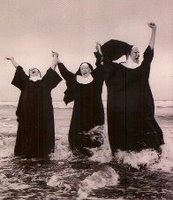

My mother, on the other hand, had been so furious with the Church following her K-12 experience at the hands of taciturn and martially-minded nuns (“Penguins!” she would say dangerously, as she blew the smoke from her Virginia Slims 120 across the room and sipped her signature E & J screw top Burgundy on ice) that she refused to have me baptised at all, much to the consternation of my great-aunts, who began to dutifully bring me icons of saints and martyrs whenever they visited, as well as the occasional trip to church itself, although no one in my family was Catholic in the way the Roman Church imagines Catholicism, or rather I suppose in the way that Protestants imagine Catholicism. Like many US Latinas/os and Latin Americans, our relationship to faith was attenuated by indigenous practices: spells, magic, curanderas, offerings in the garden, the realm of nature, candles, icons divorced of dogmatic meaning but profound with power. And, of course, like any fabulous gay proto-Catholic boy, I had my own dreams of martyrdom and priesthood within and outside of these traditions and my mother’s dedicated secularism, delighting my grandmother with lurid Crayola portraits of the Crucifixion on craft paper, while at the same time she would nurture my fascination for lip-synching to Diana Ross’s Love Hangover into a microphone at six years old. In such tantalizing combinations Chicana/o experience can be found, strangely enough.


In any event, neither Mr. Gordo’s nor my own model of rather unconventional Catholic spirituality would quite do. As I turned to my computer, my online sources gestured towards the shifting potential of godparenting as a humanistic, secular practice. The night of our gallinero, Mr. Gordo, Skanque Huore, and I all agreed that this we could offer, not the faith as practised in our worst stereotypes of Catholicism (“Who made you? God! Where is God? Everywhere!” Et al), but the special faith of human and humane values that LGBT people can express and offer the world, and especially children. This is not to say that all LGBT people are somehow special, but rather to argue the point that LGBT people can offer something unique and vital to the raising of children, a perspective grounded in our location outside of heterosexuality, ideas about personhood, identity, and worldview that complement, enhance, and expand the idea of family in a positive way. It is to argue for the return of LGBT folks back into the “family,” not in a boring, mainstream way (although no doubt there are many boring, mainstream LGBT people doing just that), nor from a position of biological essentialism, but from the standpoint of our critique of heteronormativity and our rich tradition of synthetic familial relationships that emerge from our contemporary alienation from the biological family.


Of course, some would argue that LGBT people have never really left the family, that even in our varied states of alienation we are still present, even as unspoken shame, within our families. And, from what I’ve read, younger LGBT folks, at least from the bourgeoisie, may have more “normal” relationships to family that do not meet the classic pattern of dislocation and shock that typified “coming out” for many LGBT people (and still does). The nasty stereotypes about LGBT people, that we are infantile, immature, unrealized, can still exert a strong power over even enlightened parents on the role and relationship of LGBT people to their children. But what the odd progression of LGBT “liberation” and visibility means for us today is that LGBT people are returning to the family as both parents and members of extended families (such as godparenting), and for those of us to whom this matters, we are doing this on our own terms— not under the guise of bland asexual “uncles” and “aunts” but as ourselves: fabulous, idiosyncratic, and different. Such returns can offer their own riddle in a heteronormative culture, for sure.
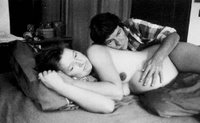

I am reminded of my experience living with a faculty family whilst finishing my doctorate. I had returned from Montréal with no place to live, under intense pressure from the Dean to finish, and feeling alienated from California. With the help of my department administrative assistant, I found a billet with Chaucer Dad, a full professor in another department, his wife Philosopher Mom (also a PhD), and their two fraternal twin sons, living there for three years and completing the thesis under their roof with their incredible support. It was an interesting re-introduction to the family, not the least of which was that Chaucer Dad and Philosopher Mom were the exact biological age of my birth parents, the effect being that in the end I began to feel like the son from the first marriage, especially as we forged a familial relationship between ourselves within the house and formed a strange unit in public, with strangers attempting to figure out the dynamic between us (who exactly belonged to whom?). Chaucer Dad and Philosopher Mom had tried, through their feminist and progressive politics, to raise their sons with an eye towards a critique of gender and societal norms, which was successful in some instances and a complete failure in others, and much to the consternation of the other faculty families that surrounded them, who unsurprisingly were invested in relatively traditional orthodoxies of family. As I was to learn during this instructive time, theories of child-rearing and political exigencies wilt under the intense heat of actual children and their strange, secret cultures. When I arrived, the boys had just turned five, and they were wild, full of mischievous boy energy, a direct confrontation with a raw and untamed masculinity that had all of us perplexed and nervous.


They burned off the heads of the Barbie dolls they were given, and destroyed the purses and various feminine toys they had been given, while at the same time had been so exposed to LGBT people before my arrival that, at that time, they had no sense of LGBT alterity, in a literal sense. Once, when they asked me why I wasn’t married, I told them I guess I hadn’t found the right boy. They responded in their innocence and sense of care that they would marry me if I couldn’t find someone. I laughed and reassured them that I would indeed find someone my own age, as they would when the time came. But their response was so “normal” I was a bit disarmed. They had no “ick” factor, they had missed that lesson that boys marry girls and vice-versa exclusively and that any other option was “sick.” Sadly, their introduction to formal education and peer networks would shift this openness to human experience, this innocence about heteronormativity, and they became, in their early school years, a bit embarrassed by my presence, their strange “family,” the butt of a schoolboy joke, their very own “funny uncle.” This heteronormative homophobia induced by schooling was countered, however, by all that they knew about LGBT people and their relationships with LGBT people within and without the family. While the dimensions of this tension remain uncertain (they are now teenagers and as such are notoriously secretive about their feelings, especially as boys, a strange reassurance to nervous heterosexuals that even fabulous LGBT creatures parading through a childhood cannot prevent the tortured manifestations of teenaged masculinity), the existence of an alternative to the heteronormativity of the schoolhouse has at the very least forced them to articulate spatial and political dimensions with “normal” and carve out a recognition of different relationships within that concept, wherever that recognition may indeed be.


Surprisingly, Mr. Gordo and I share, as I find many gay men do, an odd affinity for children and their worlds, although I am perfectly willing to entertain that this may be exclusively a factor of being gordos and having facial hair, which makes us appear, especially to young children, like characters from Where the Wild Things Are, or alternatively, overly groomed stuffed animals, curious little hands tentatively touching beards, fat cheeks, bald pates, big hairy hands and arms. I am, however, cautious over the project of parenting, for that is what parenting is for most LGBT people: a project undertaken with great care and thoughtfulness, contra the majority of heterosexual births, which like immaculate conception, Mideastern political crises, and global warming, "just happen." As Camille Paglia once infamously quipped, “penis fits vagina.” Indeed.


In fact, within LGBT communities the question of parenting can be fraught with emotion, politics, and passionate disagreements. For every loving LGBT parent having children of their own or seeking to adopt here or abroad, you will find others who claim that not having children and the bourgeois accoutrements of the familial domestic is what being queer is all about. And while I appreciate and honour the labour of child rearing by LGBT parents (and for that matter, any parent really), I have had my own fears that our growing project of LGBT parenting may be reproducing the worst of our collective social narcissism in the spectre of the overly pampered bourgeois child, a risk most LGBT parents share with their heterosexual kith and kin. The ridiculously expensive prams, special diets, and child-centred nothingness that now parade shamelessly in plush LGBT urban neighborhoods are matched in the heterosexual world, and speaks to the general American obsession with unique and special children, every one a genius.



In any event, the arrival of El Babycito, the actual infant, transformed these theoretical paradigms of pre-birth discussion, worry, and conversation into a more tactile challenge. Here is a child. Of course, the changes for La Antropóloga and Mr. Polemic have been immense, but they remain, essentially, who they were before, if also now attentive to the needs of a growing child. Steak is still served, wine still flows, although unfortunately smoking remains outside chez eux (you win some, you lose some). For our part, Mr. Gordo and I have approached our relationship to El Babycito both in the effort to “take a vested interest in raising a more complete human being” as well as an integral part of our relationship to his parents, as a connection and bond and symbol of our love and deep affection for La Antropóloga and Mr. Polemic and the privilege of being a part of the raising and care of their child. For obviously in many ways it is a privilege, the same privilege we tend to take for granted as instructors in the classroom. Through our example, we affect the direction of our students’ lives. As El Babycito grows into boyhood and later manhood, Mr. Gordo and I can provide to him a complementary relationship, a parallel parenting in the best sense: of community, of difference, of sensibility, of connection. Teaching by example of the men we are: gay, Latino, intellectual, creative, loving, affectionate, bilingual, bicultural, introspective, not necessarily in that order. And gifts. Yes, of course, Mr. Gordo and I started on the gifts early, eyes full of extravagant Auntie Mame visions. But not Disneyland. Caracas, Curious George, Madrid, Tin Tin, London, the joys of department stores, the beneficial effects of high-end products, Paddington Bear, cute little outfits (and what age is cuter than toddler, I ask you? We introduced El Babycito to his first button-down onesie in blue plaid! Although the adventures of two large hairy gay men in the baby section can be enlightening to say the least…), literature, art, nature, even Teletubbies, yes, we are up for that. Mr. Gordo can sometimes act like a Teletubby around El Babycito, in fact. But Disneyland? That is decidedly someone else’s job. (Along with the nappies— In short, ew.)